


.png)



Why Enterprise Deals Die When Your Brand Still Reads Self-Serve
.png)
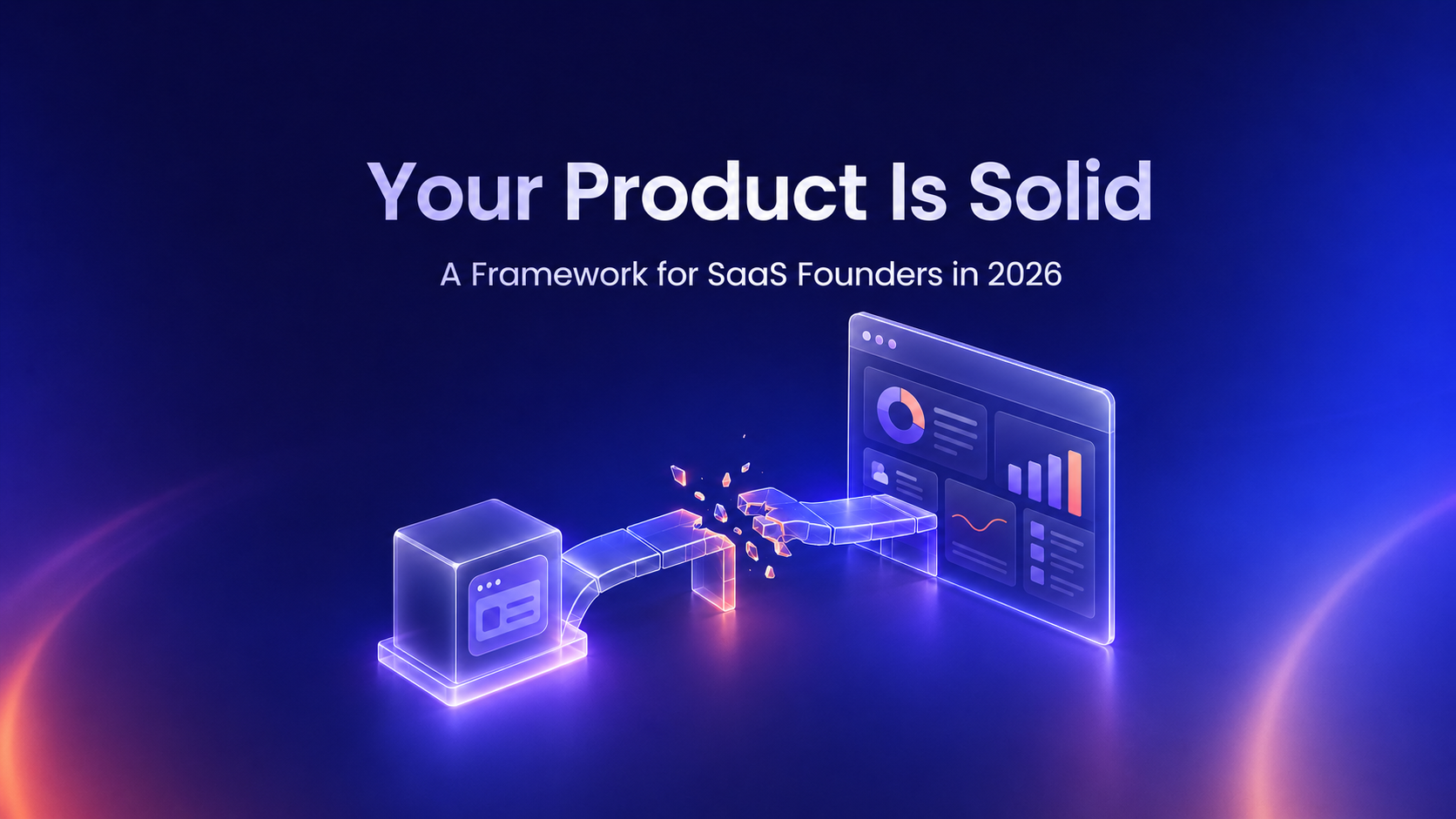
Enterprise deals dying silently after a strong demo is what happens when procurement stops trusting a brand that still reads self-serve. For founders, this means the product isn't the reason the deal stalled, the brand around it is. 86% of B2B purchases stall during the buying process, according to a 2026 compilation of Forrester, Gartner, and Demandbase research, and the average enterprise buying group now includes 13 internal stakeholders and 9 external participants on complex purchases.
That gap matters right now because founders default to blaming sales execution or pricing when deals go quiet, when the actual cause is often invisible to them: a procurement reviewer landed on a self-serve homepage and quietly downgraded the vendor's credibility before anyone on the sales team knew evaluation had even started.
This article walks through where the deal actually dies, a 3-question audit to find your own gap, and what to fix first.
What you'll learn
- Why "good product" and "closed deal" are not the same thing
- Where enterprise deals actually die (it's rarely the demo)
- The 3-question audit to find your own brand-trust gap
- What to fix first, in priority order
- How to tell if this is costing you deals right now
The gap between "good product" and "closed deal"
A good product gets you the meeting. It doesn't get you the signature, that's decided by whether the brand around the product reassures a buying committee evaluating risk, not just features.
- Demos consistently go well; deals still stall after
- Sales reps report "great call, then radio silence" as a recurring pattern
- The product roadmap keeps shipping, win rate doesn't move
This is the same silent-evaluation pattern covered in what procurement committees actually check, a five-point checklist that runs entirely without vendor visibility.
Where the deal actually dies (it's rarely the demo)
The deal dies in the self-serve research phase, before a procurement reviewer ever books a call, the same disconnect covered in why most B2B SaaS companies lose enterprise deals before the first sales call.
Before: Homepage leads with "Start your free trial, no credit card required," pricing hidden behind a form, zero mention of security or governance anywhere above the fold.
After: A clear "Enterprise" path exists alongside self-serve, with named compliance certifications, case studies at the buyer's scale, and language that speaks to a committee evaluating vendor risk, not just a user evaluating features.
A procurement reviewer who lands on the self-serve version forms a judgment in under a minute, and that judgment happens before your sales team is even aware the evaluation started.
The 3-question audit to find your own gap
Run this against your own site and materials in under fifteen minutes.
- Does the brand match the deal size? A $150K contract shouldn't be sold by a page designed for a $50/month signup.
- Does the website answer committee questions without a sales call? Security, compliance, implementation timeline, if a reviewer has to ask, you've already lost time you can't see.
- Is there a clear next step after the call that isn't "let's schedule another call"? Committees stall on ambiguity as much as on price.
If two of three come back weak, the product isn't the problem holding deals back.
What to fix first
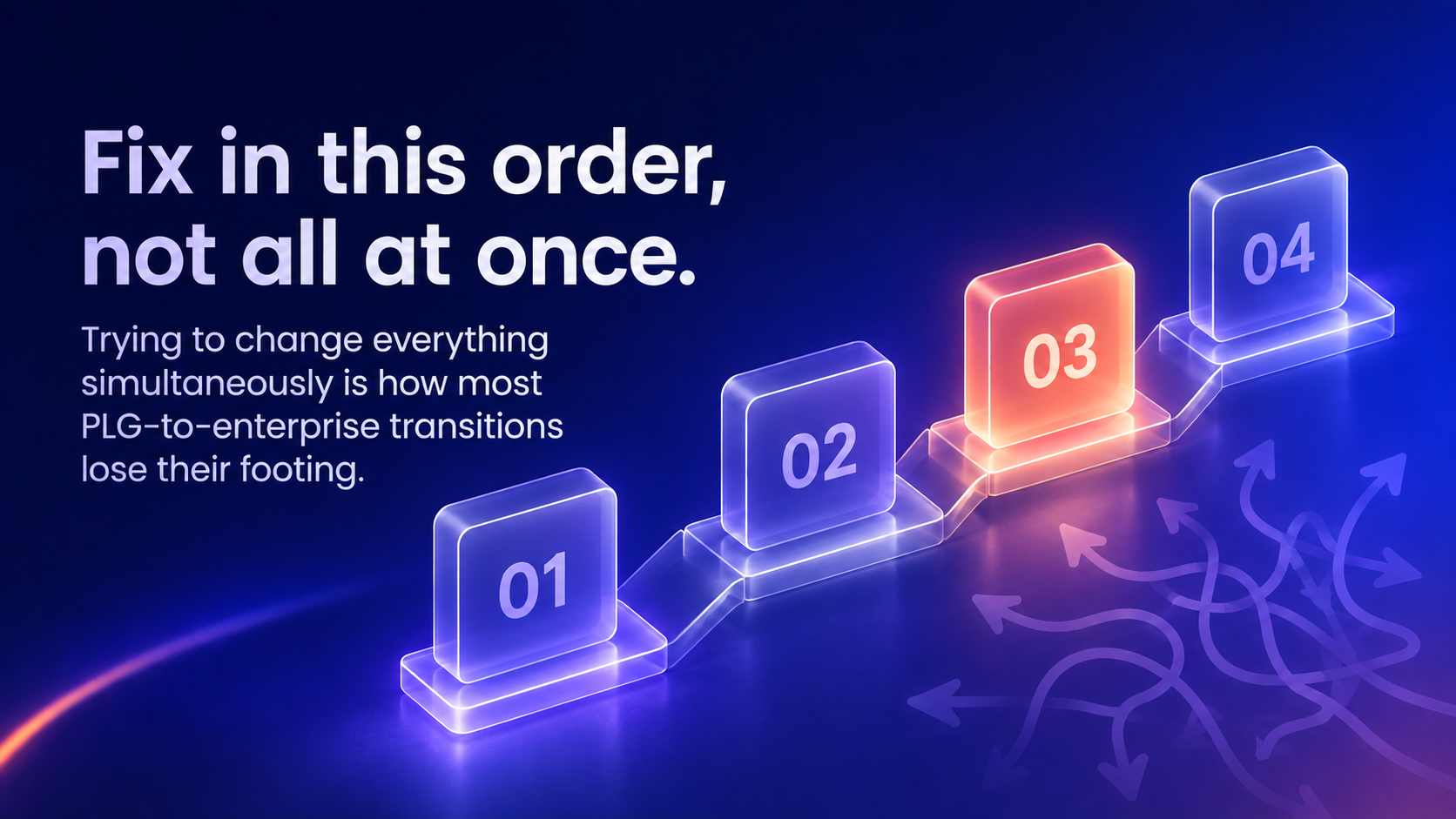
Fix in this order, not all at once, trying to change everything simultaneously is how most PLG-to-enterprise transitions lose their footing, a sequencing problem covered in what the PLG-to-enterprise transition actually requires.
- Add committee-facing proof (compliance, case studies at scale) without removing self-serve
- Fix the "next step" ambiguity on every page a procurement reviewer is likely to land on
- Only then revisit deeper positioning or visual identity work
Most founders want to start with a rebrand. The audit above almost always points somewhere cheaper and faster first.
Frequently asked questions
Why do enterprise deals stall after a good demo?
Enterprise deals typically stall after a good demo because a procurement committee independently reviews the vendor's website, security posture, and case studies during a self-serve research phase the sales team can't see. If that material reads self-serve rather than enterprise-ready, the committee downgrades vendor credibility regardless of how well the demo went.
How big is a typical enterprise buying committee in 2026?
A typical enterprise B2B buying committee now includes an average of 13 internal stakeholders and 9 external participants on complex purchases, according to 2026 industry benchmarks. This is a significant increase from prior years, meaning more silent, independent evaluation happens before a vendor is aware.
How can I tell if my brand is the reason deals are stalling, not my product?
Run the 3-question audit: check whether your brand matches your typical deal size, whether your website answers committee questions without a sales call, and whether there's a clear next step after every call. If your product consistently earns strong first calls but deals still go quiet afterward, the brand is the more likely cause.
What should a B2B SaaS company fix first — website or full rebrand?
Most companies should fix committee-facing proof points and next-step clarity on the existing website before considering a full rebrand. A rebrand addresses visual identity, but the more common gap is missing proof and ambiguous next steps, both of which are faster and cheaper to fix.
Does a self-serve homepage actively hurt enterprise deals?
Yes. A homepage built entirely around self-serve signup language signals the wrong stage of company to a buying committee evaluating governance and vendor stability, even if the product itself is fully capable of serving enterprise customers.
What does MAD Magnet's audit check for this specific gap?
MAD Magnet's Pilot Program includes a brand-to-deal-size audit that checks whether public-facing materials match the buyer a company is actually trying to close, alongside the broader positioning and funnel diagnosis. The output is a prioritized fix list rather than an assumption that a full rebrand is required.
Final thoughts
A good product buys you the meeting. It's the brand and positioning around it that decide whether the meeting turns into a signature. Founders who run the 3-question audit above usually find the fix is faster and cheaper than the rebrand they were bracing for. Start with a Pilot Program to see exactly where your own gap is costing you deals.
Explore more insights
.png)

.png)
The partner that makes your marketing team unstoppable
Completely free. Immediate recommendations.



.svg)


.svg)

.svg)