


.png)



Why Most B2B SaaS Companies Lose Enterprise Deals Before the First Sales Call
.png)
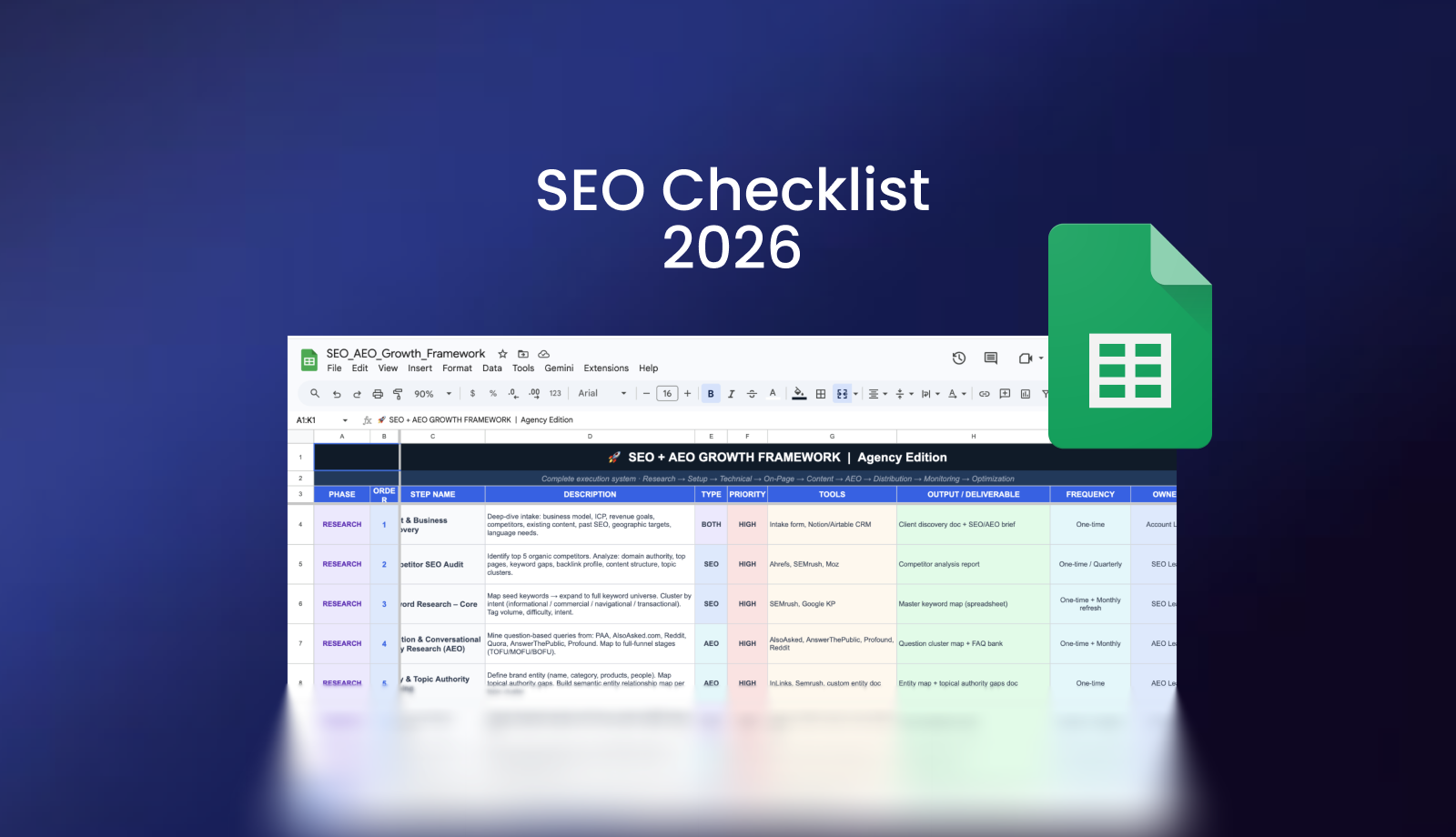
70 to 80% of the enterprise buying journey happens before the first conversation with sales. Most B2B SaaS companies are losing deals they never knew existed, because of brand and positioning gaps that eliminate them from the shortlist before sales is ever involved.
The instinct when enterprise pipeline slows is to hire more sales reps, improve the pitch, or tighten the qualification process. These are the right fixes for 20% of the problem.
The other 80% happens in channels the sales team never touches: AI search, industry content, peer conversations, G2, and the thirty-second judgment a procurement committee member makes when they land on your website during self-serve research.
This is the gap most B2B SaaS companies do not diagnose, because the deals lost in the dark funnel never appear in a CRM.
What you'll learn
- Where enterprise deals are actually being lost and why the CRM does not show it
- The shortlist problem: why 86% of enterprise buyers only consider brands they already know
- The 5 brand gaps that eliminate B2B SaaS companies from enterprise consideration before the 1. call
- What the dark funnel is and how to influence it
- What needs to change and in what order
The Data Shows the Problem Is Not Closing, It Is Getting on the List
The numbers from 2025 and 2026 enterprise sales research paint a consistent picture:
But the same data shows that reps are not closing worse, they are working fewer opportunities. The problem is not sales execution. It is pipeline quality and volume.
Read those three data points together: most buyers only consider brands they already know, shortlists have shrunk to two or three vendors, and 71% of buyers pick their first choice. If your brand is not familiar to the buyer before the sales cycle begins, you are not on the shortlist and the shortlist is where deals are actually won.
This is not a sales problem. It is a brand visibility and credibility problem that shows up in sales metrics.
The Dark Funnel: Where Enterprise Deals Are Actually Won and Lost
70% of the pipeline is invisible, according to Forrester's 2025 research. This invisible portion is the dark funnel, the channels where enterprise buyers research, form opinions, and make preliminary decisions that your analytics tools cannot capture.
The dark funnel includes:
- AI search, buyers asking ChatGPT or Perplexity "what are the best tools for X" and receiving a synthesized answer that never generates a trackable visit to your website
- Peer conversations, a CMO mentioning your company in a Slack community or at a dinner before any buyer has contacted you
- Industry content, a buyer reading your blog post or LinkedIn content and forming an opinion about your expertise without submitting a form
- G2 and review platforms, a buyer reviewing your rating, reading your one-star reviews, and comparing your profile to competitors without any interaction you can track
- Word of mouth from existing customers, a buyer's network connection mentioning your company favorably, which creates a warm impression before any sales motion begins
-
Your CRM shows you the last 20 to 30% of the journey: the demo request, the discovery call, the proposal, the close or no-decision. The dark funnel is where your brand either earns or loses its place on the shortlist that produces those CRM entries.
The only way to influence the dark funnel is through brand visibility built before buyers enter an active evaluation, not through sales process improvements applied after they already have a preference.
5 Brand Gaps That Eliminate B2B SaaS Companies From Enterprise Consideration
Gap 1: Absent from AI search
51% of B2B buyers now start their software vendor research inside an AI chatbot rather than a search engine. When a buyer asks ChatGPT "what are the best tools for enterprise [your category]," the AI synthesizes an answer from the sources it trusts most. If your brand does not appear in that answer, you are not in the buyer's initial consideration set, before they have visited any vendor website.
This is the newest and fastest-growing dark funnel channel. The brands appearing consistently in AI answers for their category are building a shortlist advantage that compounds over time. The brands absent from those answers are invisible during the most influential phase of the enterprise buying journey.
For the complete system to fix this, read our guide on SEO and AEO optimization for B2B SaaS websites and our overview of what AEO is and why it matters in 2026.
Gap 2: Social proof that does not match the buyer
Enterprise buyers look for social proof from companies similar to theirs, same size, same industry, same level of operational complexity. A testimonial from a 15-person startup does not reassure a 250-person procurement committee. A case study without specific metrics does not help an economic buyer justify a budget approval to their CFO.
79% of the time, the CFO now holds final decision power on enterprise software purchases — up significantly from prior years as budget scrutiny has increased post-2023. The CFO is not persuaded by a testimonial from a company their company has never heard of. They are persuaded by a case study from a company they recognize, showing a measurable business outcome, with a named executive willing to be quoted.
If your current social proof was built for your first customers, individual contributors and small teams, it is actively working against you in enterprise evaluation. Read more about how to build enterprise-grade social proof.
Gap 3: Positioning written for the wrong buyer
The positioning that converted self-serve signups was written for someone experiencing the product's immediate value personally. The positioning that converts enterprise procurement committees must address the business problem, the organizational risk, and the ROI, not the feature that makes the product enjoyable to use.
A buyer landing on a homepage built for individual contributors and asking "is this the right vendor to recommend to my leadership team for a $150K contract" will almost always answer no, not because the product is wrong, but because nothing on the page speaks to the question they are asking.
This is the single most common positioning gap in B2B SaaS companies navigating the PLG-to-enterprise transition. The product has evolved. The target buyer has evolved. The positioning has not.
Gap 4: No content in the channels enterprise buyers use for research
Enterprise buyers research extensively before shortlisting. The companies that appear consistently in the content they read during this phase, in industry publications, in AI search answers, in peer community discussions, earn a credibility advantage before the sales cycle begins.
Organic content influences 40% of enterprise deals and has an 18-month compounding payback period. The B2B SaaS companies investing in content now are building a shortlist advantage that will pay off in deals closing 12 to 18 months from now. The companies not investing in content are increasingly invisible in the research phase, regardless of how good their product is.
Gap 5: Brand presence that signals startup, not enterprise
Enterprise buyers make a risk-adjusted decision. Choosing a vendor for a large contract is a professional risk, if it goes wrong, the person who approved it is accountable. A brand that signals organizational instability, early-stage growth, or inconsistency across touchpoints creates a risk signal that rational enterprise buyers avoid.
86% of enterprise buyers shortlist only known brands — and 71% choose their first-choice vendor from the shortlist. Being a known brand at your target deal size requires looking like a company that has closed deals at that size before. Inconsistent visual identity, sparse social proof, and generic messaging communicate the opposite.
Why Fixing Sales Process Does Not Fix This Problem
The instinct when enterprise win rates decline is to improve sales execution: better discovery questions, tighter qualification, stronger objection handling, more follow-up cadences. These improvements are real and worth making. They address the 20 to 30% of the buying journey where sales is involved.
They do not address the 70 to 80% of the journey where the buyer is forming opinions, doing research, and building a shortlist without any sales interaction. Nearly two-thirds of buyers prefer to talk to sales late in the journey, after completing self-serve research. By the time your best sales rep gets on the first discovery call, the buyer already has a strong opinion about whether your company belongs in their consideration set.
If that opinion was formed during research that your brand failed to influence, because you were absent from AI search, because your content did not appear in the channels they used, because your social proof did not include companies similar to theirs, the sales rep is starting every conversation at a disadvantage they did not create and cannot fully overcome.
The fix is upstream. It is brand, positioning, and content investment made before buyers enter an active evaluation, not sales process improvements made after they already have a preference.
What Needs to Change and in What Order
The sequence matters as much as the investment. Building brand visibility before positioning is clear produces visibility for the wrong message. Investing in content before social proof is built produces content that is not trusted. The order is:
First: Resolve positioning and ICP. Before any brand visibility investment, be clear about who you are targeting, what problem you solve for them, and what makes your positioning specific enough that the right buyer immediately recognizes themselves. Read our guide on brand positioning for B2B SaaS for the complete framework.
Second: Audit what enterprise buyers currently see. Run a brand audit against the five gaps above. Identify which ones are most likely costing deals today. Prioritize the changes with the highest commercial impact before addressing cosmetic gaps. Our guide on how to audit your B2B SaaS brand before rebranding covers this in detail.
Third: Build enterprise-grade social proof. Identify your five best current customers matching your target enterprise profile. Produce case studies with specific metrics. Get reviews from VP and C-level stakeholders on G2. This is the foundation that makes every other brand signal trustworthy.
Fourth: Build AI search visibility. Implement the technical AEO foundation and build content that answers the questions your ICP types in ChatGPT when they are in the research phase. This is the channel growing fastest and the one most competitors have not yet addressed.
Fifth: Ensure brand consistency across every touchpoint. Every touchpoint a buyer encounters during their pre-sales research, website, LinkedIn, G2, press mentions, sales deck, should signal the same level of credibility and communicate the same positioning.
At MAD Magnet, every engagement starts with a Pilot Program that diagnoses exactly where these gaps exist before we touch any deliverable. The brands that close the enterprise gap fastest are the ones that diagnose before they redesign, and start the brand work before the sales motion is fully built on top of it.
If you want to understand where your brand currently sits relative to what enterprise buyers expect, book a free 20-minute call.
Frequently Asked Questions
Why are our enterprise deals stalling even though the product is strong?
According to TrustRadius 2024, 86% of enterprise buyers shortlist only known brands — meaning if buyers do not recognize your company before the sales cycle begins, you rarely make the list your sales team is trying to close. Enterprise deals stall when the brand does not signal credibility at the contract size being targeted, the positioning does not give the champion enough to build an internal business case, and social proof does not include companies similar to the buyer's. These are brand problems that show up in sales metrics.
How much of the enterprise buying journey happens before the first sales call?
70 to 80% of the enterprise buying journey happens before the first conversation with sales, according to Forrester's 2025 research. Nearly two-thirds of buyers prefer to talk to sales late in the journey, after completing self-serve research. By the time your sales team gets a call, the buyer already has a shortlist and if your brand was not visible during the research phase, you are not on it.
What is the dark funnel and why does it matter for B2B SaaS enterprise sales?
The dark funnel refers to the 70% of the enterprise buying journey that happens in channels your sales and marketing team cannot directly track peer conversations, AI tool research, industry communities, content consumed without a form fill. Your CRM shows you the last 30% of the journey. The dark funnel is where your brand either earns or loses its place on the shortlist. The only way to influence it is through brand visibility built before buyers enter an active evaluation.
Why do enterprise buyers shortlist only brands they already know?
Enterprise buyers are managing personal career risk. A procurement decision that goes wrong is professionally costly for the person who approved it. Choosing a known brand is a defensible decision. Choosing an unknown vendor is a risk. This dynamic means that 86% of enterprise buyers shortlist only brands they recognize before the sales cycle begins. Brand visibility is therefore not a vanity metric, it is a prerequisite for being considered.
How do we get our B2B SaaS company on enterprise shortlists before the sales cycle starts?
Three things put you on enterprise shortlists before the sales cycle begins: AI search visibility (appear when buyers research your category in ChatGPT and Perplexity), category content (be the company publishing the most useful content about the problems your ICP is solving), and social proof from recognizable companies (logos and case studies from companies your target buyer already knows). None of these can be built in 90 days. They compound over 6 to 12 months of consistent investment before the buyer enters an active evaluation.
Our win rate on enterprise deals is declining, is this a sales problem or a marketing problem?
The average B2B win rate in 2025 was 21% — 79% of qualified deals were lost or ended in no decision. For enterprise deals above $100K, the win rate drops below 15%. A declining win rate with an unchanged product is almost always a marketing and brand problem that shows up in sales metrics. The primary causes are increased buying committee size, longer sales cycles, and buyers who have already formed a preference before engaging sales. Fixing sales process when the root cause is brand credibility produces marginal improvement. Fixing brand and positioning produces structural improvement.
Explore more insights
.png)

.png)
The partner that makes your marketing team unstoppable
Completely free. Immediate recommendations.



.svg)


.svg)

.svg)