


.png)



Rebuilding Pocus's content system to convert the buyer, not just the community.
Ongoing retainer
Q1 focus before expansion
Prioritized by quarter

What we did:
01 — Understood the product before touching a brief
We embedded into Pocus's product, ICP, and competitive landscape before writing anything. Content that doesn't come from product understanding doesn't convert.
02 — One ICP per quarter, not all three at once
Q1 focused exclusively on the Head of Sales at PLG companies hitting a conversion ceiling. Q2 shifted to VP of RevOps. Q3 built the CRO narrative. Each quarter had one content category, one keyword cluster, one LinkedIn narrative. The team knew exactly who they were writing for and who they were not writing for yet.
03 — Expert-led content, not a content calendar
We matched topics to people with lived experience, not researchers. Articles moved from category education toward practical guides and decision frameworks, content that gets bookmarked and shared internally.
04 — Filled the content gap before expanding
A competitor audit revealed that no one was writing about what happens after the signal fires, the rep behavior, the message, the sequence. We built a cluster of eight articles around that gap in Q1 alone, each targeting a specific search intent.
05 — Built a system that scales without scaling headcount
An AI Ready Framework for Pocus's content operation, any writer, internal or external, could produce on-brand content without a lengthy brief. Production velocity doubled in month three without adding a single person.
The result:
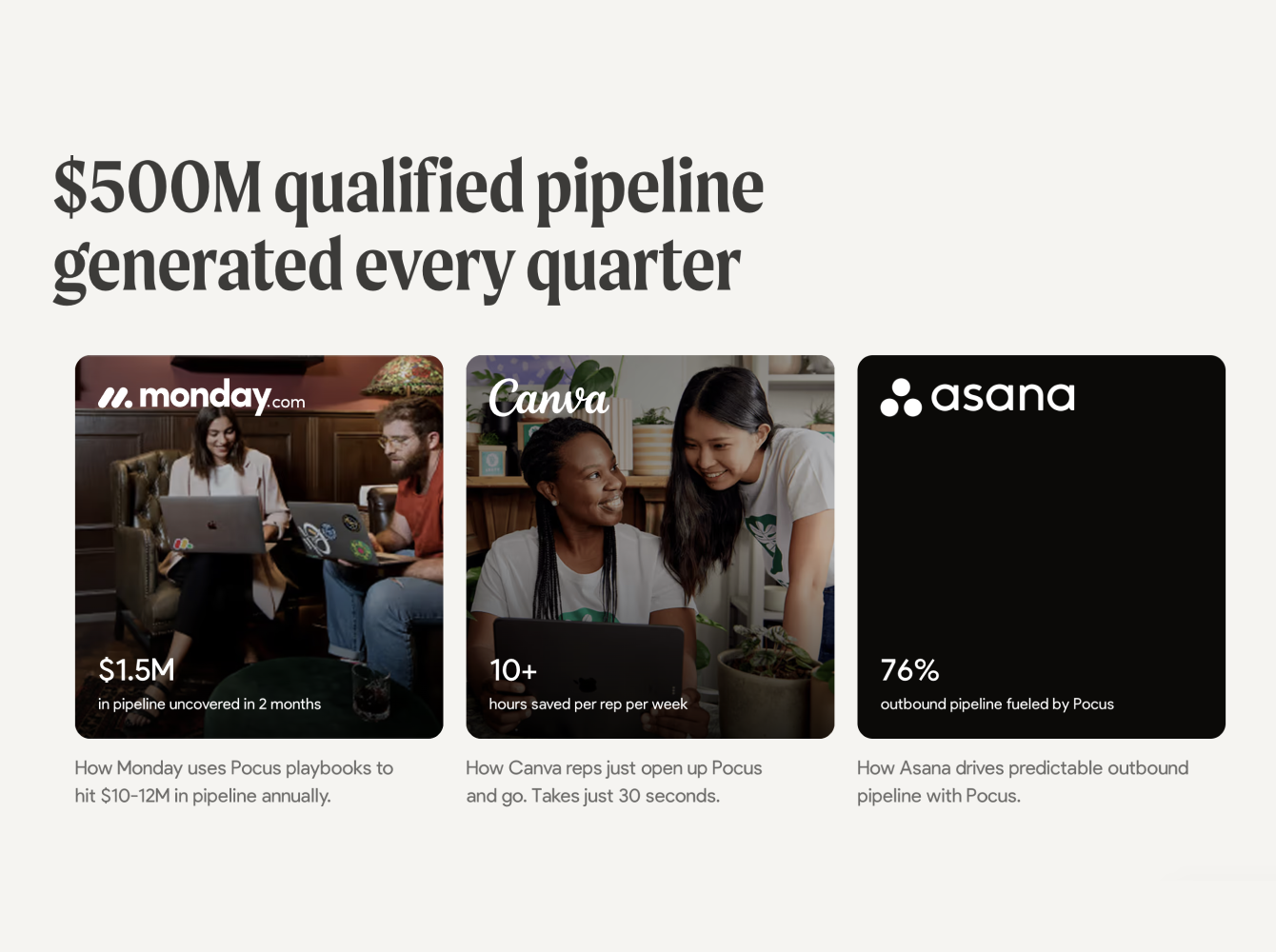
In six months, Pocus moved from a content operation that was producing for the community to a content system that was producing for the pipeline. Non-branded organic traffic grew quarter over quarter for the first time since launch. Three articles from the Q1 content cluster became the highest-converting pages on the site. The LinkedIn narrative for the founder account shifted from category education to buyer-specific insights, engagement from Head of Sales and VP RevOps profiles increased significantly. The freelancer model was replaced by a coordinated content system where every piece had a named ICP, a defined funnel stage, and a keyword intention attached before it was written.
The biggest shift was not in the numbers. It was in how the team talked about content internally. They stopped asking "what should we write this week" and started asking "which ICP are we moving this quarter and what do they need to see to trust us."
Explore more projects


The partner that makes your marketing team unstoppable
Completely free. Immediate recommendations.



.svg)


.svg)

.svg)