


.png)



From feature-first messaging to a positioning that closes enterprise deals.
Sprint to delivery
Identified and prioritized
Win rate, existing customer

What we did:
01 — Brand Audit
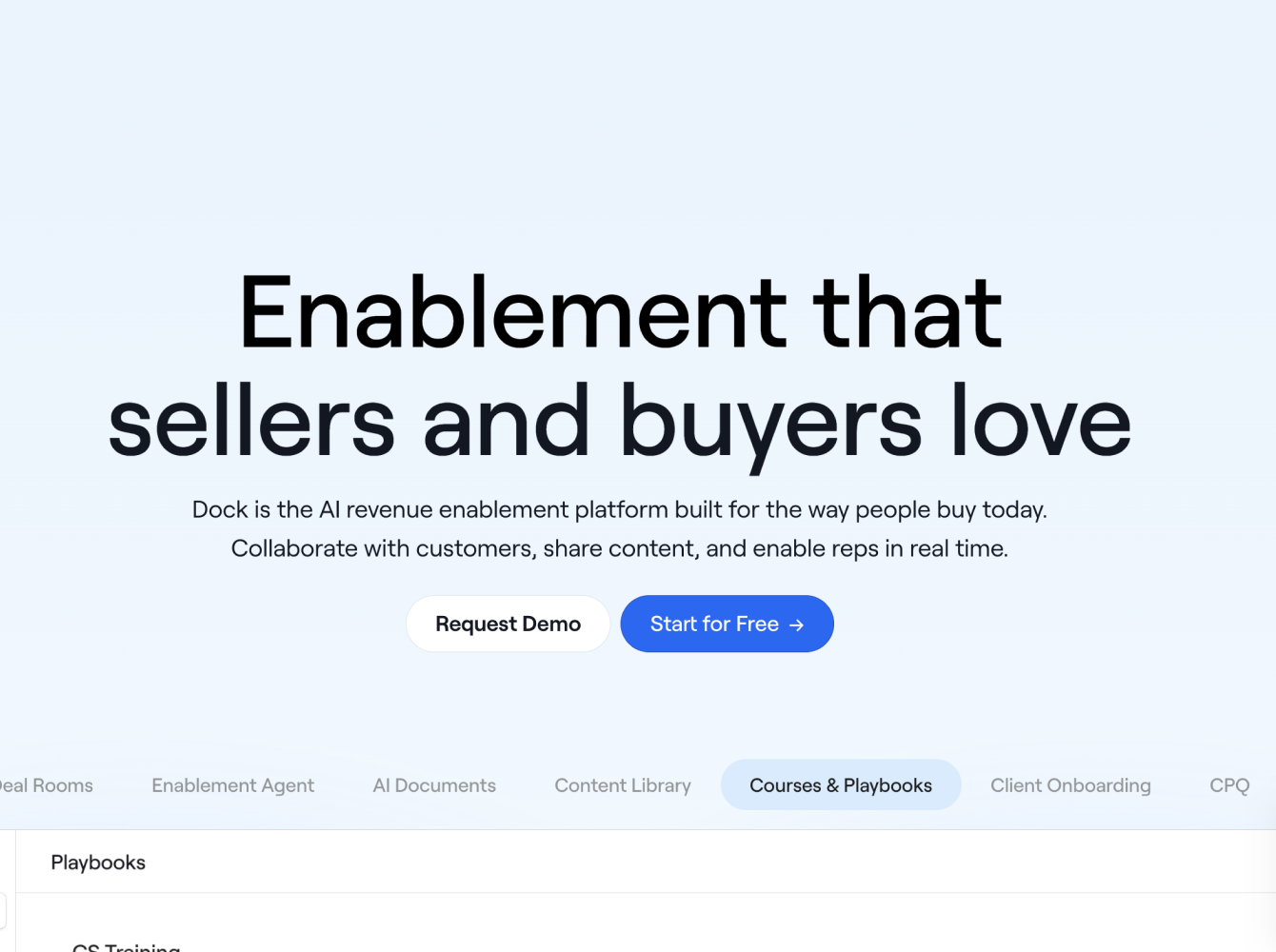
We started with a full diagnostic of Dock's digital presence, homepage, LinkedIn, product pages, competitor landscape, and AI search visibility. The finding was consistent: strong product, weak first impression. Three priority gaps identified, each tied to a specific buyer behavior we could observe in how enterprise procurement teams evaluate tools.
02 — ICP & Competitor Research
Four buyer personas mapped in full. For each: what triggers the search, what they fear, what a win looks like internally, and the one message that gets their attention. We added five competitors Dock hadn't named and identified the positioning angle none of them were occupying.
03 — AI Ready Content Framework
Revised positioning and tagline built around the enterprise buying moment, not the feature set. A one-pager for proposals and sales conversations. Persona-specific messaging for each of the four ICPs. Homepage headline options. An AI Prompt Block the team can use to generate on-brand content without briefing from scratch every time.
04 — 12-Month Marketing Roadmap
Built backward from the annual revenue goal. Four quarterly sprints, each focused on one ICP — VP of Sales in Q1, Head of Enablement in Q2, Customer Success in Q3, CRO in Q4. Month 1 broken into weekly tasks. Actionable from day one.
Team on this sprint:
Marketing strategist, copywriter. Weekly deliveries throughout, structured meetings at the end of each week.
The result:
Dock walked away with a complete strategic foundation, four documents built on four weeks of structured diagnosis. The positioning shift was specific: from "AI revenue enablement platform built for the way people buy today" to messaging that leads with the outcome their enterprise buyer is evaluated on internally. The roadmap gave the team a clear answer to the question they had been asking: which buyer do we talk to first, and what do we say. For a platform with four strong ICPs, that clarity is worth more than a rebrand.
BEFORE
– One message for all buyers
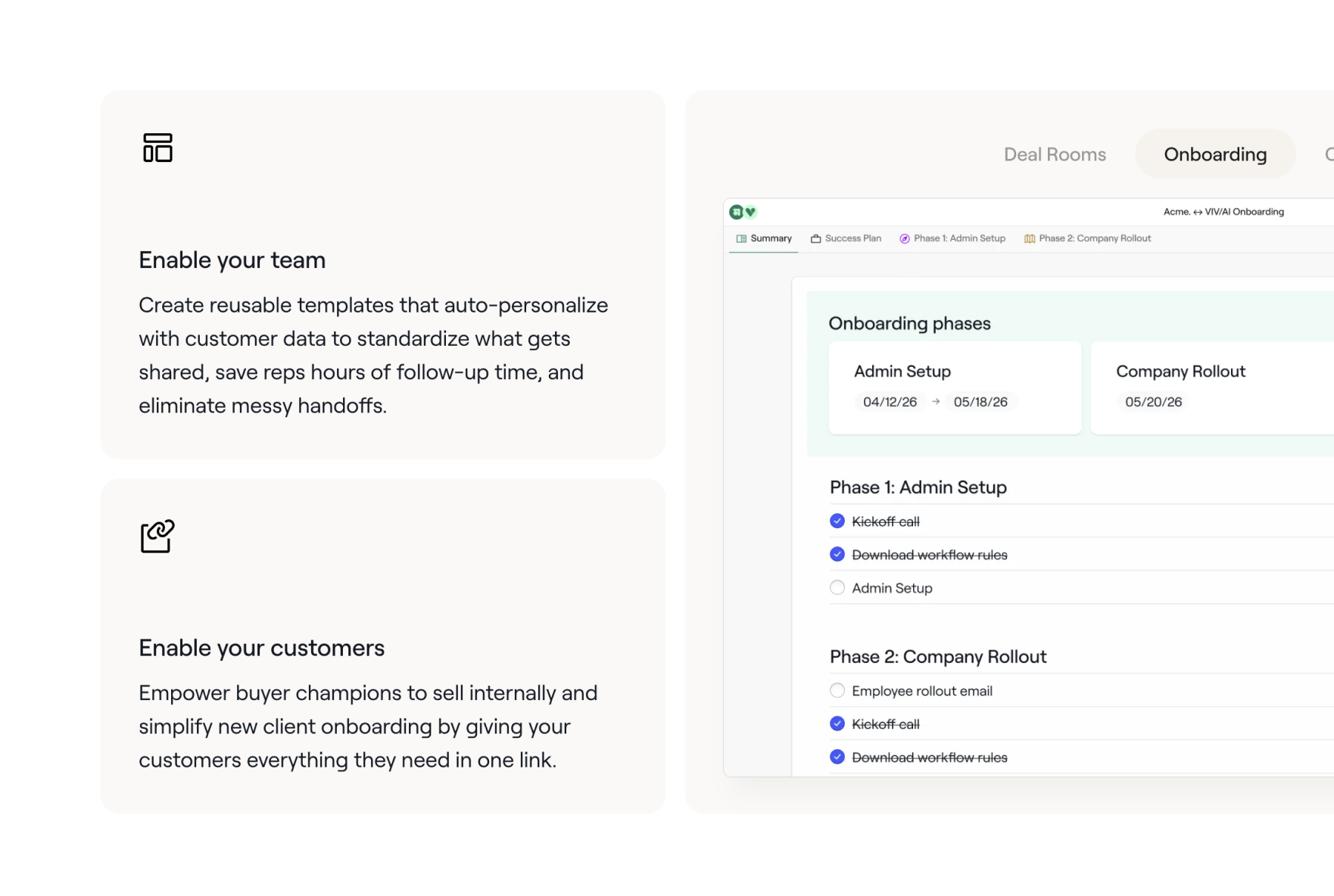
– Feature language: "Deal rooms, onboarding, client portals"
– Enterprise trust signals buried below the fold
– Generic urgency: "built for the way people buy today"
– No AEO optimization, invisible in AI search
– No quarterly marketing focus, all ICPs at once
AFTER
– Four persona-specific messaging frameworks
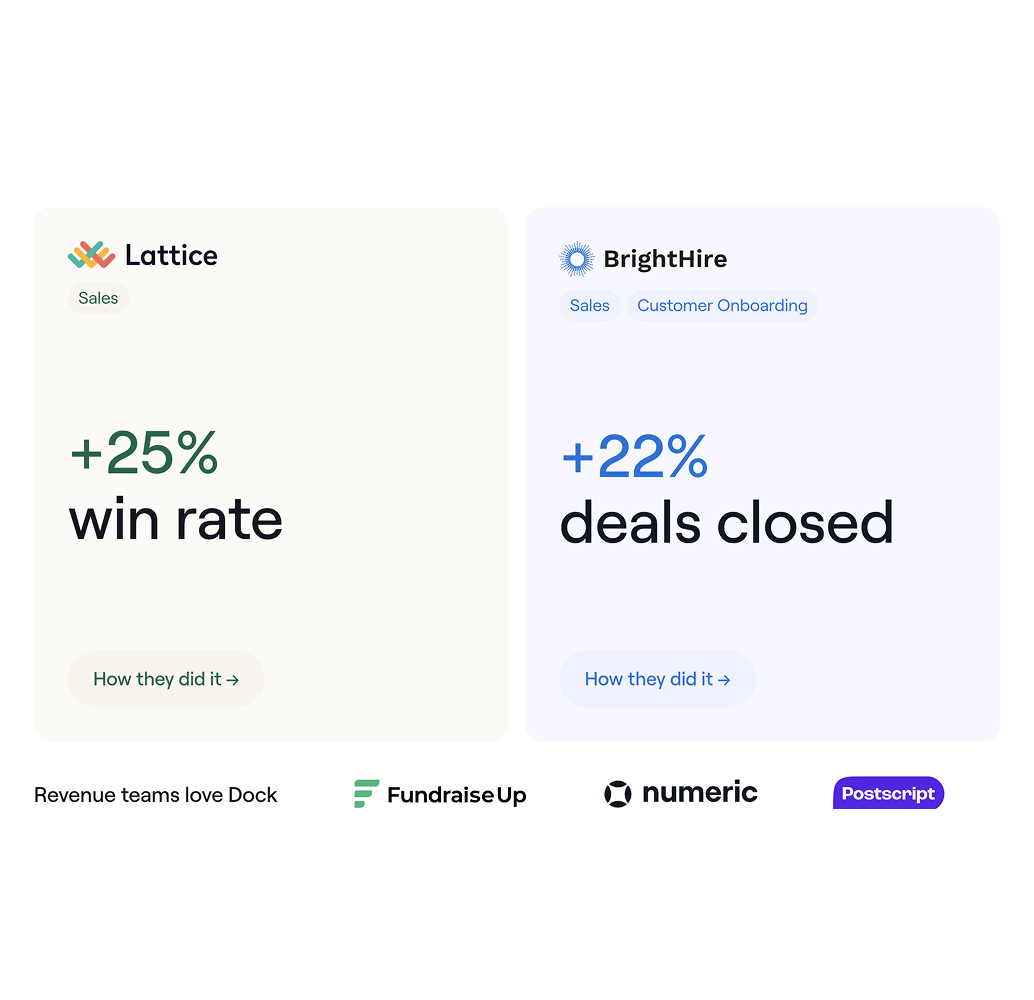
– Outcome language: win rates, deal cycles, saved hours
– SOC 2, G2, customer results front and center
– Specific urgency tied to enterprise sales motion
– AEO-optimized copy for enterprise search queries
– Quarterly roadmap with one ICP focus per quarter
Explore more projects


The partner that makes your marketing team unstoppable
Completely free. Immediate recommendations.



.svg)


.svg)

.svg)