I've run social for 50 consumer brands. The biggest was a retail brand with 200 stores and more than 250,000 followers. None of them ever asked me to go viral. They asked me to sell the next drop, to the right people, and to make it look like nothing else in their feed.
In B2B SaaS, the consumer brand conversation usually starts somewhere else. Someone in a planning meeting puts Duolingo's TikTok on the screen, the green owl doing something unhinged to a trending sound, and asks: "Why can't we be more like this?"
Everyone laughs. A few people nod. Two weeks later the company page publishes its first meme, and it gets more likes than anything the page has posted all year.
It gets zero demo requests. The CFO who was supposed to sign off on the budget never saw it.
CEO in Q3 planning: why can't we be more like Duolingo
Marketing, two weeks later: posts the company page's first meme
Likes: best post of the year
Demo requests: 0
The CFO: never saw it
I get the instinct, and it's a good one. Consumer brands are better at social than most software companies. But I can tell you from the inside that the tone was never what made it work. What made it work was the structure behind every post: who it was for, what it looked like, what it said, and who carried it to people we could never reach on our own.
Copying the tone of a consumer brand without the structure underneath it gets you a funny post your buyers never see.
So this is my list. What I learned running social for brands that sell things you can hold, what the best consumer brands do on top of that, and the few habits I'd leave at the door when you bring it into B2B, because a market of a few thousand buyers works differently from a market of everyone with a phone.
Key takeaways
- Retail and SaaS map almost one to one: a drop is a launch, the store window is your company profile, the people in the store are your sales and customer success team.
- Consumer brands market to people who aren't buying today. In B2B that's about 95% of your market.
- Treat every big moment like a drop: its own art direction, its own message, one audience.
- Creators are a must, chosen for that one audience and briefed for it.
- Notion found creator videos "50 to 100 times cheaper than Google or Facebook" for signups.
- Leave behind reach for its own sake, trends without a reason, mascots and follower counts as the goal.
A Shelf and a Browser Have More in Common Than You Think
Consumer brands sell something you can hold. SaaS sells something you log into. On social, that difference matters a lot less than people assume. Almost everything I did for a physical product has a direct equivalent in software.
The same job, two kinds of product
| In retail | In B2B SaaS |
|---|---|
| A new collection or drop | A feature launch or a new product |
| The store window | Your company profile and homepage |
| The lookbook | The product tour and the demo video |
| Staff in the store who know every product | Your sales, customer success and engineers |
| A creator's try on or haul | A creator's walkthrough of the product |
| The season | The quarter's GTM priority |
| Regulars and loyalty members | Your customers and community |
| "Is it in stock in my size?" in the comments | "Does it work with our stack?" in the comments |
What changes is the size of the decision. Nobody needs a procurement review to buy a jacket. A SaaS buyer is about to commit a budget for a year, often with five other people in the room, over a few months instead of a few minutes. That makes the consumer playbook more important in B2B, not less: the bigger the decision, the more people want to see someone they trust already using the thing.
What stays the same is the buyer. People buy from brands they remember, brands they recognize in a crowded feed, and brands they've seen people like them use. That's the whole craft of consumer social, and it works on a CFO too.
Armin Molavi made the same move I did, from consumer brands to software. He learned marketing at Hilton and P&G and now runs the customer organization at Instructure, the company behind Canvas. In a Chief Marketer interview, his advice to B2B marketers is the consumer habit in one line: spend less time on the feature list and more on whether your buyer's working day will actually get better.
Only 5% of Your Buyers Are Shopping. Consumer Brands Win the Other 95%.
In retail, nobody needs to be convinced of this either. Most people who follow a store aren't buying anything today. They follow because they like how the brand looks and what it has to say, and when they need something, it's the first name that comes to mind.
B2B marketers got to the same idea through research. Professor John Dawes of the Ehrenberg-Bass Institute estimates that only about 5% of B2B buyers are in market at any given time. The other 95% won't buy for months or years. Peter Weinberg and Jon Lombardo of LinkedIn's B2B Institute called this the 95:5 rule and drew the consumer conclusion from it.
“The brand that gets remembered is the brand that gets bought.”
Most B2B social still works like a sales funnel with a company logo on it. So the useful question is what, exactly, to take from consumer brands. Here's the short version before the long one.
What travels from consumer brands to B2B
| Copy | Translate | Leave behind |
|---|---|---|
| Drops with their own art direction | A mascot → your own people | Reach for its own sake |
| One audience per moment | Influencers → creators your buyers already follow | Trends without a reason |
| Comments as content | Pop culture moments → your market's moments | Follower counts as the goal |
| Speed with clear guardrails | Brand characters → recurring series and formats | A character nobody asked for |
Lesson One: Treat Every Big Moment Like a Drop
In retail, a new drop was never just a post. Every drop was a campaign. It had its own art direction, so you could recognize it in the feed before you read a word. It had messaging written for that drop, not borrowed from the website. And every piece of it pointed the same way.

Most B2B calendars work the other way around: three posts a week, every week, whether or not there's anything to say. The big moments already exist, a product launch, a research report, a funding round, a new market. They just get one post each, in the same template as everything else.
Ramp is one of the B2B companies moving toward the drop model. Look at how it describes the job of its next social lead.
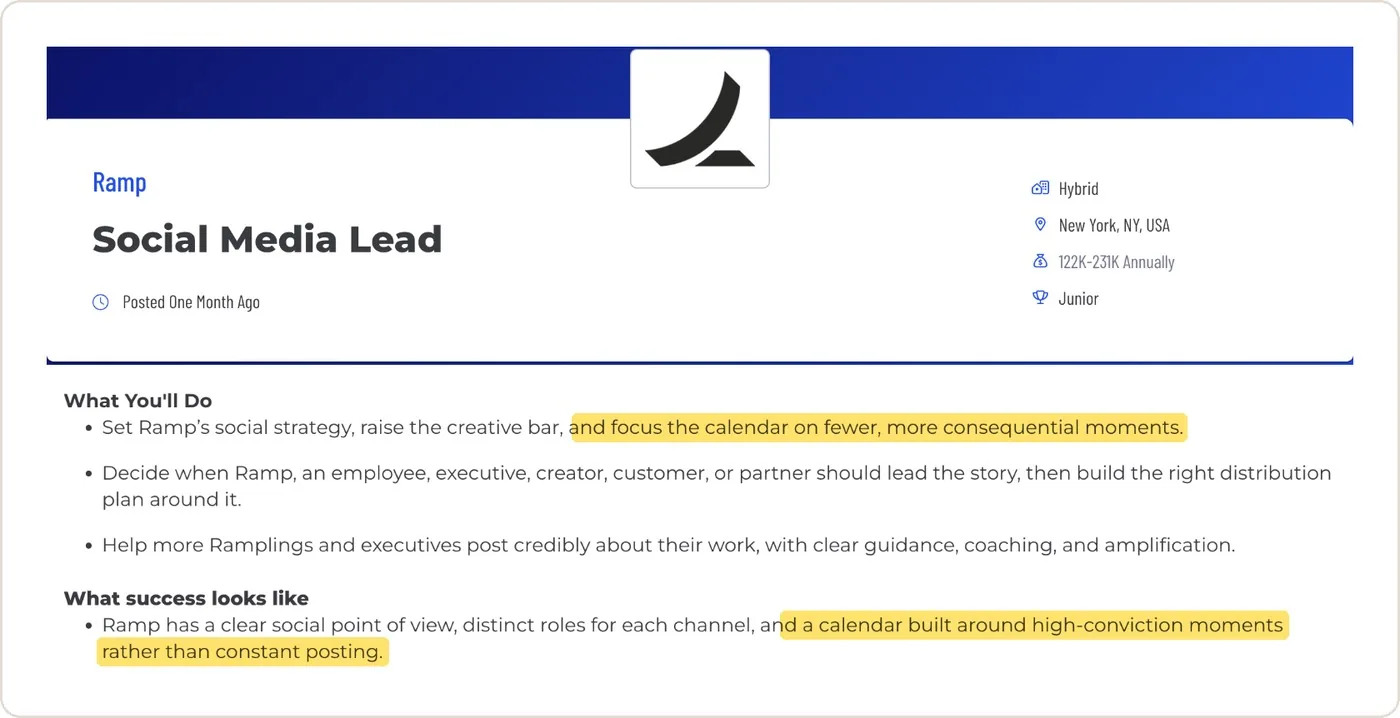
That's consumer thinking in a finance software company: pick the moments that matter, give each one its own look and its own message, then plan who carries it. We wrote the full version for launches in How to Launch a New Feature on Social.
Lesson Two: One Drop, One Audience
This is the rule I'd tattoo on every B2B content calendar. Every drop we ran was built for one target group. Not everyone who follows the brand. The people that specific product was for.
That one decision made every other decision easier. It told us what the message should say, what the visuals should look like and, above all, which creators to bring in.
B2B posts tend to do the opposite. They try to speak to the whole buying committee at once, so the CFO, the engineer and the end user all get the same sentence, and none of them feel it was written for them.
Pick one audience per moment. A pricing change is for the person who signs the budget. An API release is for the engineers who will evaluate it. A new integration is for the people who use both tools every day. Then let the rest of the plan follow from that choice, including who in your company should say it. What Every Role in Your Company Should Post maps which voice reaches which buyer.
If a post is for everyone in the buying committee, it's for no one in it.
Lesson Three: Creators Are Not Optional
For us, creators were an absolute must. And we never picked them by follower count alone. We picked them by the audience of the drop: who does this specific group already follow and trust?
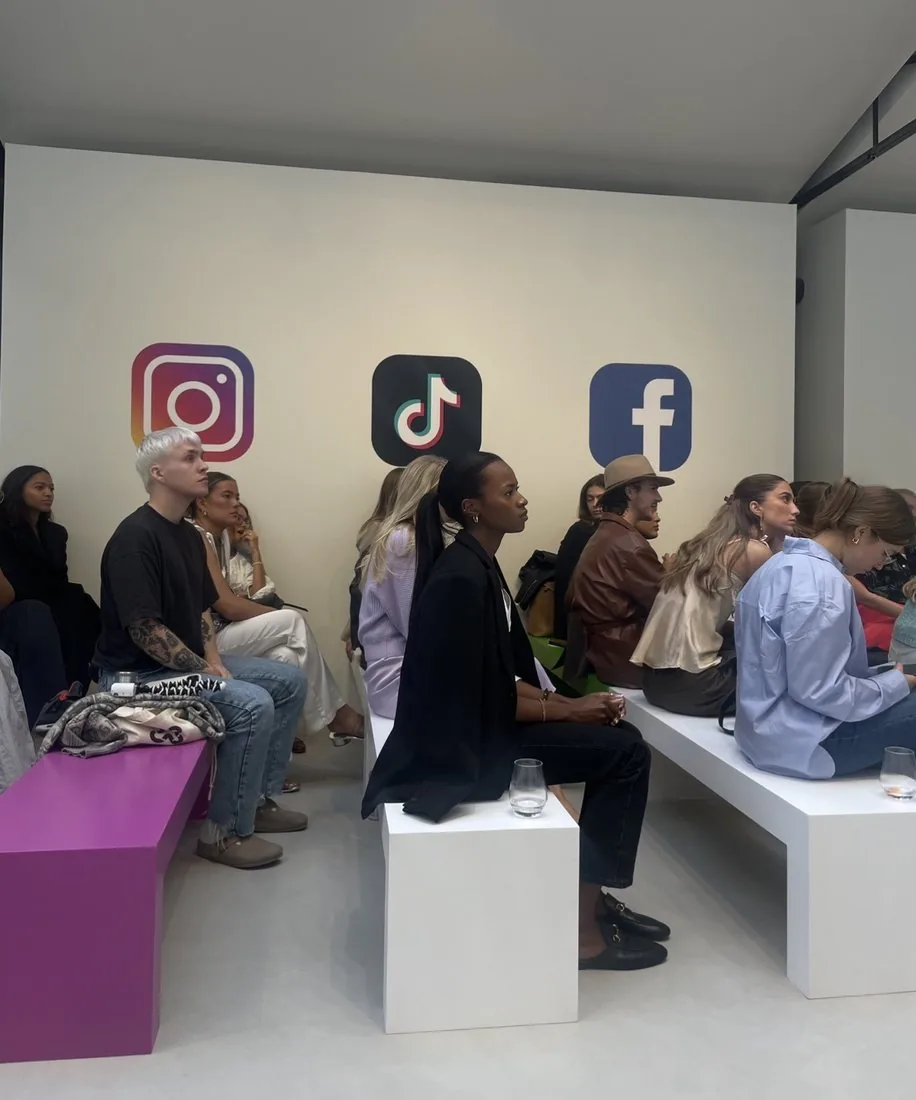
Then came the part most brands skip. Every creator got a brief written around that audience, not around our product. And we worked out together how they would come into the campaign, so it felt like their content and not our ad with their face on it.
The biggest move I saw was at the retail brand with 200 stores: a collaboration with Tamara Kalinić, a creator with millions of followers whose audience trusts her style. In my honest opinion, that one campaign did more for sales through social than a thousand paid Meta ads could have.
Software companies are catching up, and Notion is the clearest example. Ben Lang, Notion's former head of community, described in a 2024 AMA how the company found YouTubers who already mentioned Notion and asked them to make full videos about how they used it. Notion tracked signups per video with UTM links.
“50 to 100 times cheaper than Google or Facebook.”
Ali Abdaal was one of those creators, and Lang described the effect as a snowball, as other YouTubers adopted Notion too. The B2B data points the same way: LinkedIn reports that nearly six in ten buyers discover new brands through creator content in early awareness, and in the decision phase nearly half visit a vendor's website after engaging with creator content.
The translation for SaaS: find the people your buyers already follow, the operators with newsletters, the practitioners with a podcast, the consultants who write about your category. Then brief them the way we briefed creators in retail. For software, the math usually favors many small creators. Sandra Djajic from Chatbase suggests working with 20 to 50 niche creators instead of chasing one big name, turning the best of them into affiliates and co-marketers, and giving them a small toolkit so they can ship content faster.
A creator brief should describe your buyer before it describes your product.
No creator budget? Pay in something else
Not every company can afford a creator with millions of followers. Maven, the course platform, built its early marketplace on people posting about it for free, and says the approach now brings in more than 30,000 new leads a month. A post from Maven's team breaks it into four moves, and all of them translate to SaaS:
- Make sharing a flex. For two years, teaching on Maven was by application, and applicants had to post about their course and collect 50 leads to prove there was demand. Experts published surveys and launch announcements just to get in.
- Make the payoff automatic. Instead of paying for sponsored posts, share revenue or leads. Maven pays its experts 90% of every sale, and Notion pays template creators roughly 92% of every template sale.
- Give them an asset with their name on it. Maven's course certificates go straight to LinkedIn, a natural moment to celebrate. It feels special even when people know it was generated, and it scales.
- Build on what people already do. Maven's free Lightning Lessons came from noticing that instructors were already running webinars, then adding what Maven does best: distribution and the emails that follow.
The questions for a software company are the same. What does sharing your product say about the person sharing it? And what can you hand them that makes them look good doing it? None of it works, though, if people don't actually like the product. That part no brief can fix.
Lesson Four: A Face Beats a Logo
In retail, the face of a campaign was often a creator's. B2B companies have something consumer brands would love to have: people inside the company with real expertise that buyers want to hear from.
Even Duolingo needed a face. When Zaria Parvez took over its dormant TikTok account in 2021, she built it around Duo, the mascot, turning the owl into an influencer in his own right: a character people could recognize, follow and talk to.
TikTok followers for Duolingo in about two years, according to Contagious
You don't need a mascot. LinkedIn's data says the combined networks of a company's employees are about 12 times larger than the company page's following, and 75% of decision makers say thought leadership is a more trustworthy way to judge a company than its product sheets or marketing materials.
So put people in front. Your CEO, your engineers, your product lead, each speaking to the buyer who already trusts them. The company profile still matters, but as the source of truth, not the main character.
Lesson Five: Comments Are Content
This is the detail from Duolingo's story that most people skip. Duo's first real breakthrough wasn't a video. It was comments. Duo showed up in the comments on other people's videos, those comments became the brand's first success on the platform, and the team built the rest of the strategy on top of that.
For B2B, this is the most transferable lesson on the list, and the cheapest. Your buyers are already in conversations, under posts from the analysts, operators and creators they follow.
A thoughtful comment from your CTO, on a post your buyers are already reading, needs no algorithm to beat.
The B2B version doesn't need to be funny. It needs to be useful, specific, and early enough in the thread to be read.
Lesson Six: Make Your Art Direction Recognizable
Every drop I worked on had an art direction you could spot with the logo covered. Consumer brands call these distinctive assets: a color, a shape, a character you'd recognize before reading the name. B2B brands tend to treat visual identity as a style guide for the website.
Gong is the B2B company that did this best on social. Employees, who call themselves Gongsters, used Gong's purple gradient in their LinkedIn profile pictures and cover photos. During its coordinated LinkedIn takeovers, people asked Gong's CMO how they did it, because all they could see on their feed was purple.
When the feed is all one color, you notice the company before you read the name.
You don't need everyone to change their profile picture. You do need something that makes your company recognizable in a feed before anyone reads the name: a consistent color, a recurring visual format, a series name your buyers start to look for. Our Gong teardown covers the rest of that program.
Lesson Seven: Speed Needs Permission
Duolingo's social team didn't win with a better content calendar. According to Parvez, there was no big planning meeting or formal list of restrictions behind the early TikTok work. Duolingo had a "test and learn" approach, and people who believed in an idea could get budget for it.
“You can't plan virality. But you can plan mentality.”
B2B companies rarely lose on social because of bad ideas. They lose because a post about this week's news gets approved next week. If every post needs three signoffs, the only content that survives is content nobody minds being late.
The fix isn't removing approval. Decide in advance what doesn't need it: a clear set of topics, tone and boundaries that leaders and the social team can work inside without waiting, and a fast lane for anything time sensitive.
What to Leave Behind
Some consumer habits don't translate, and copying them costs more than it earns.
Duolingo's audience is anyone who might want to learn a language. Yours might be a few thousand people in specific roles. Three hundred views inside your market beat a million outside it.
A trending format works when it carries something your buyer cares about. Used just to join the trend, it tells buyers you're talking to someone else.
Duo works because people use Duolingo every day and have feelings about it. A character for an invoice reconciliation tool has to work much harder. Your people are the better characters.
What matters is whether the right roles at the right companies see you, which LinkedIn's analytics show by job title, industry and company size, and whether that turns into conversations.
Back to the Planning Meeting
Go back to the room where someone put the owl on the screen. "Why can't we be more like this?" is the wrong question. These are the ones I'd ask instead:
- Which moments this quarter deserve to be treated like a drop?
- Who exactly is each one for?
- Whose face should that buyer recognize?
- Which creators does that buyer already trust, and what goes in their brief?
- Where is that buyer already talking, and who from our team should be in those comments?
- What would make our posts recognizable before anyone reads our name?
- What could we post today without waiting a week for approval?
None of those questions need a mascot or a trending sound. Every one of them comes from consumer brands.
I learned them selling to people who scroll past a hundred brands a day. Your buyers scroll past just as many. They just have bigger budgets.
If you want to work out the answers for your company, a Social System Review is where we start: we look at how your social runs today and where the biggest gaps and opportunities are.